Freelancing is a popular way to earn money online. It allows beginners to start working without prior experience. Freelancing involves providing your professional services to various clients on a project basis. For freelancing for beginners, it is best to start by identifying simple skills and practicing daily for free.
Popular platforms include Upwork and Fiverr for easy client access. Earning potential begins at 500 dollars monthly but grows fast. Challenges include finding clients and handling irregular income at first. Growth opportunities remain excellent with consistent effort over time.
Many beginners succeed by building portfolios quickly through free online resources. They learn basic skills and join communities for support. This path offers flexibility and independence over time.
Freelancing Overview
| Topic | Category | Difficulty Level | Skills Required | Platforms | Investment Needed | Earning Potential | Work Type | Growth Opportunities |
| Content Writing | Writing | Low | Research, grammar | Upwork, Fiverr | 0 dollars | 500 to 3000 monthly | Remote projects | High demand worldwide |
| Graphic Design | Design | Medium | Canva, Photoshop | Fiverr, 99designs | 50 dollars | 1000 to 5000 monthly | Gig based | Growing with brands |
| Virtual Assistance | Admin | Low | Organization, communication | Upwork, Freelancer.com | 0 dollars | 800 to 2500 monthly | Hourly tasks | Steady remote work |
| Web Development | Tech | Medium | HTML, coding | Upwork, Fiverr | 100 dollars | 2000 to 8000 monthly | Project based | Booming tech sector |
| Social Media Management | Marketing | Low | Content creation, analytics | PeoplePerHour, Fiverr | 0 dollars | 600 to 4000 monthly | Ongoing contracts | Expanding digital space |
What is Freelancing
Freelancing means working independently without a traditional employer. You complete specific tasks for clients and get paid per project. Many people choose this path for greater control over their schedule.
Beginners often start with simple services like data entry or basic writing. Freelancing lets you work from anywhere in the world. Platforms connect you directly to global clients every day.
This work style has grown rapidly in recent years. 1.57 billion people participate worldwide according to latest data. Earning potential varies but offers real independence for motivated starters.
Why Choose Freelancing as a Beginner
Freelancing provides flexibility that traditional jobs cannot match easily. You set your own hours and choose projects you enjoy most. Beginners gain valuable experience without office politics or long commutes.
Many beginners pick freelancing to build skills while earning income. No experience is required if you show willingness to learn fast. Growth opportunities appear quickly through repeated client work.
This career path supports personal development in multiple areas. You manage time better and improve communication skills daily.
Freelancing Hobbies (Helpful for Growth)
- Blogging about daily life experiences
- Creating social media content for fun
- Designing simple graphics with free apps
- Learning new languages through online videos
- Taking photos and editing them creatively
- Writing short stories in free time
- Managing personal budgets using spreadsheets
- Organizing virtual events for friends
- Testing apps and giving feedback
- Networking on professional discussion forums
Skills Needed to Start Freelancing for Beginners
Basic communication skills help you explain ideas clearly to clients. Time management allows you to meet deadlines without stress. Research abilities let you gather information quickly for any task.
Beginners focus on one or two core abilities at first. Writing and graphic design rank among top starting options today. Programming knowledge opens higher paying opportunities later.
Practice consistently to improve your chosen skills over weeks. Free tutorials teach fundamentals without any cost involved.
Freelancing Skills List
- Content writing for blogs and websites
- Graphic design using Canva or Photoshop
- Virtual assistance for administrative tasks
- Web development with basic HTML and CSS
- Social media management and posting
- Data entry and spreadsheet handling
- Video editing with free software
- SEO optimization for better rankings
- Translation services for multiple languages
- Proofreading and editing documents
- Email marketing campaign creation
- Logo design and branding work
- Copywriting for sales pages
- Voice over recording services
- Online tutoring in specific subjects
- App testing and bug reporting
- Digital marketing strategy planning
- Photography and image retouching
- Customer support via chat or email
- Excel data analysis and reports
Best Freelancing Platforms for Beginners
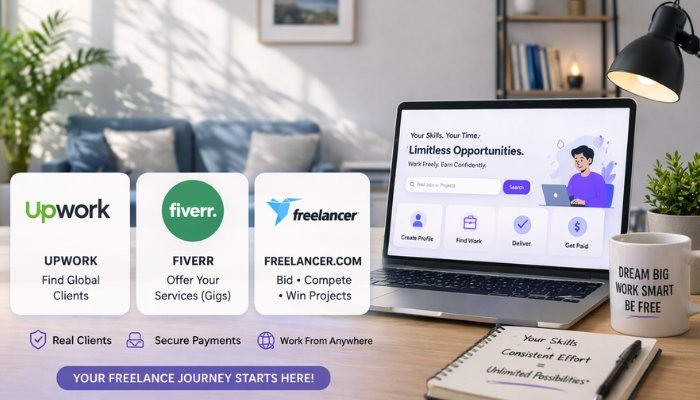
Upwork offers many entry level jobs for new freelancers daily. You create a profile and send proposals to potential clients. Fiverr lets you sell ready made services called gigs easily.
Freelancer.com runs contests where beginners can win projects fast. PeoplePerHour focuses on hourly work for quick starts. These sites provide built in payment protection for safety.
Start with one platform to learn the system properly first. Build reviews gradually to unlock better opportunities over months.
How to Start Freelancing with No Experience
Step 1: Choose a Skill
Pick one service you enjoy most right now. Research demand on platforms before deciding fully. Focus helps beginners gain traction faster.
Step 2: Learn the Basics
Use free YouTube tutorials and online courses daily. Practice core techniques until confident enough. Free resources build strong foundations quickly.
Step 3: Practice Regularly
Create sample projects for imaginary clients often. Repeat tasks to sharpen your abilities steadily. Daily practice turns beginners into pros fast.
Step 4: Create a Portfolio
Build a simple website or Google Drive folder. Include practice work and descriptions clearly. Portfolio showcases skills to potential clients effectively.
Step 5: Choose Platforms
Sign up on Upwork or Fiverr first. Complete profile sections accurately and fully. Platforms connect you with real jobs immediately.
Step 6: Set Up Profile
Add professional photo and detailed bio text. Highlight any related experience or hobbies naturally. Strong profile increases bid success rates hugely.
Step 7: Start Bidding
Send proposals on entry-level jobs daily. Keep prices low initially for reviews. Consistent bidding lands your first client soon.
Step 8: Price Your Services
Begin with $10 to $20 per hour rates. Raise prices after securing positive feedback. Smart pricing attracts more work early on.
Step 9: Communicate Clearly
Reply to clients within 24 hours always. Ask questions to understand needs fully. Good communication builds trust and repeat business.
Step 10: Deliver Projects
Complete work before deadlines and exceed expectations. Ask for feedback to improve future tasks. Quality delivery earns five-star reviews easily.
Step 11: Get Reviews
Request testimonials after successful project endings. Positive reviews boost your visibility on platforms. Reviews help attract higher-paying clients.
Step 12: Scale Income
Raise rates and hire help as business grows. Diversify services to reach more markets. Scaling turns side income into full career.
How to Build a Strong Portfolio
Gather samples from personal projects or practice work you completed. Create a free website using WordPress or Wix to showcase everything. Include descriptions that explain your role in each sample clearly.
Add client testimonials once you finish real projects successfully. Use Canva to design professional looking portfolio pages quickly. Update it monthly with fresh examples of your best work.
Share your portfolio link in proposals and social media profiles. This step builds trust with potential clients immediately.
How to Get Your First Client
Send personalized proposals on Upwork highlighting your willingness to learn. Offer a small discount for your initial project to attract interest. Reach out to friends or family for possible small tasks first.
Post services on social media groups and forums regularly. Join LinkedIn and connect with business owners who need help. Follow up politely after initial contact if needed.
Deliver exceptional results on that first job to earn a review. Use positive feedback to win more clients in future bids.
Common Mistakes to Avoid
Many beginners underprice their services at the start. Set fair rates based on market research instead. Do not accept every project without checking requirements carefully.
Avoid missing deadlines which damages your reputation fast. Always communicate clearly with clients about progress updates. Never ignore contract details before starting any work.
Learn from early errors to improve your approach steadily. Track time spent on tasks for better future estimates.
Freelancing Income and Growth Opportunities
Beginners often earn between 500 and 2000 dollars in the first few months. Experienced freelancers reach 5000 dollars or more monthly with time. Diversify services to increase overall income potential steadily.
Growth opportunities expand as you gain positive client reviews. Specialize in high demand areas like AI tools or digital marketing. Scale by hiring subcontractors once your business grows larger.
Many freelancers turn this into full time careers successfully. Continuous learning keeps your skills relevant in changing markets.
Tools and Resources for Freelancers
Google Docs helps with collaborative writing and editing projects efficiently. Trello organizes tasks and deadlines in simple boards. Zoom enables clear video calls with international clients worldwide.
Canva creates professional designs without advanced software knowledge. PayPal receives payments securely from global clients instantly. Grammarly checks writing for errors before submission always.
Free resources like YouTube tutorials teach new skills quickly. Join online courses on Udemy for structured learning paths.
Freelancing Tools
- Trello for project management boards
- Canva for quick graphic designs
- Grammarly for writing corrections
- PayPal for secure client payments
- Zoom for video meetings
- Google Drive for file storage
- Notion for personal organization
- Buffer for social media scheduling
- QuickBooks for simple invoicing
- Figma for collaborative design work
Advantages and Disadvantages of Freelancing
Freelancing gives complete freedom over your daily work schedule. You select projects that match your interests and abilities perfectly. Income can grow faster than traditional salary jobs over years.
However irregular payments create budgeting challenges sometimes. Finding clients requires ongoing marketing effort from you. Isolation may occur without office colleagues around daily.
Weigh both sides before committing full time to this path. Many people enjoy the independence despite minor drawbacks involved.
Aspect | Advantages | Disadvantages |
| Work Schedule | Flexible hours let you set your own timetable. Work when you feel most productive. | No fixed routine can lead to poor time management and longer working hours. |
| Location Freedom | Work from anywhere with just a laptop and internet. Travel while earning. | Isolation from colleagues may cause loneliness and lack of team support. |
| Income Potential | Unlimited earning possible. Top freelancers reach $200,000+ annually. | Unpredictable income creates cash flow issues. Some months are very low. |
| Autonomy | Be your own boss. Choose projects, clients, and rates that suit you. | All business tasks (marketing, invoicing, admin) fall on you unpaid. |
| Work-Life Balance | Better balance for many. Prioritize family, hobbies, or personal goals. | Blurred boundaries often mean working evenings or weekends without breaks. |
| Skill Growth | Diverse projects accelerate learning and build a strong portfolio fast. | High competition on platforms pressures you to keep upgrading skills. |
| Job Security | Freedom to switch clients or niches easily when opportunities arise. | No guaranteed work or steady paycheck. Dry spells can last weeks. |
| Benefits & Perks | Keep more of your earnings. Possible tax deductions for home office. | No company benefits like health insurance, paid leave, or retirement plans. |
| Client & Project Variety | Select interesting work. Collaborate with global clients from different countries. | Client management issues like late payments or scope changes are common. |
| Startup Cost | Low investment needed. Start with basic tools under $100. | Self-funded marketing and tools add up over time without employer support. |
| Overall Satisfaction | High satisfaction when you do work you love. 44% earn more than in jobs. | Burnout risk is higher due to constant hustling for new projects. |
Future Scope of Freelancing
The freelance market continues expanding rapidly into 2027 and beyond. Digital transformation creates more remote opportunities every year globally. Artificial intelligence tools will boost productivity for all freelancers soon.
Beginners who adapt early will capture higher paying niches easily. Demand for specialized skills like AI integration will rise sharply. Remote work trends support long term growth in this field.
Freelancing Interesting Facts
- 73 million Americans work as freelancers currently
- Gig economy contributes over 1.27 trillion dollars yearly
- Freelance platforms market reached 9.91 billion dollars in 2026
- Over 50 percent of workforce may freelance by 2027
- Average freelancer earns around 99 thousand dollars annually
- India ranks among top countries for global freelancers
- Remote work increased freelancing by 300 percent since 2020
- Women represent nearly 40 percent of all freelancers worldwide
- 1.57 billion people engage in freelance activities globally
- Most freelancers prefer flexibility over traditional employment
FAQs
How much can beginners earn in freelancing?
Beginners start with 500 to 2000 dollars monthly. Consistent effort raises income within six months. Platforms help track progress easily.
How do beginners start freelancing with no experience?
Beginners start by learning one basic skill online. Create profiles on Upwork and Fiverr quickly. Offer low rates for first few clients.
What skills are required for freelancing?
Writing, design and communication rank as essential skills. Practice daily improves them fast. No advanced degrees needed at all.
How much time is required to start freelancing?
Dedicate 10 to 20 hours weekly at first. Many beginners see results in one month. Consistency matters more than speed.
What is the income potential in freelancing?
Experienced freelancers earn 5000 dollars or higher monthly. Growth opportunities depend on skill development. Diversify services for better results.
Conclusion
Freelancing offers beginners a practical path to earn money online. You gain freedom and skills through consistent daily effort. Start small and focus on delivering quality work always.
Follow the steps outlined to build your career steadily. Platforms and free tools make the process accessible today. Earning potential improves with time and client reviews.
The future looks bright for motivated freelancers worldwide. Embrace challenges and keep learning new skills regularly. Success comes to those who persist patiently.