
Mastering 10 Best Social Media Engagement Strategies
In the current digital landscape, online visibility has become highly competitive for brands globally. Therefore, Mastering Social Media Engagement Strategies is absolutely critical to achieving sustainable business growth. Indeed, simply posting messages online is no longer enough to attract new customers. Instead, organizations must build real, interactive relationships with their target audiences to stay relevant [2]. Consequently, platforms measure success by tracking how actively your followers interact with your daily posts. For example, comments, shares, saves, and likes show how valuable your audience finds your brand. As a result, businesses are shifting their focus from follower counts to deeper community interactions. This shift helps build stronger customer trust and improves long-term customer retention. Moreover, social media algorithms actively reward content that generates deep, meaningful discussions. Specifically, posts that receive quick interactions are shown to a much wider audience. Thus, understanding how to drive conversation is a vital skill for modern digital marketers. In this guide, we will explore the best methods to optimize your online presence and build a highly loyal audience. What Is Social Media Engagement? To begin, we must define what social media engagement actually means in simple terms. Specifically, it is the measurement of how people interact with your profiles and content. Because interactions show interest, they are much more valuable than passive profile views. Therefore, this concept is the true heart of any digital community. In 2026, these interactions include several different actions that users take. First, users can like your posts to show quick support for your brand. Secondly, they can write comments to ask questions or share their personal thoughts. Furthermore, they can share your content with their own friends, extending your overall reach. Meanwhile, they can save your helpful tips to read them again at a later date. Also, they can send direct messages to ask about your specific products or services. Thus, every single interaction serves as a valuable signal of audience interest. Why Social Media Engagement Matters in 2026 First of all, organic reach on social media platforms has dropped significantly over the years. Therefore, companies cannot rely on simple posting to reach their target audience. Indeed, focusing on social media audience engagement is the only way to bypass these platform limitations. Because highly engaging posts get prioritized, your content will naturally reach more people. Secondly, consumer trust has become much harder to win in the modern digital age. Consequently, buyers look for brands that actively talk with their followers online. For example, responding quickly to customer comments builds immediate credibility and trust. Thus, active discussion turns casual web browsers into highly loyal paying buyers. Thirdly, community-driven marketing is experiencing massive growth in the industry. Specifically, modern customers prefer to feel like they belong to an exclusive group. Therefore, social networks are shifting from broadcast channels to digital meeting spaces. As a result, companies that encourage user interaction will naturally dominate their markets. Finally, brand visibility is directly tied to the level of feedback you receive. If your posts get no interactions, the algorithms will assume your content is boring. Consequently, your updates will stop showing up in your followers’ feeds entirely. Clearly, maintaining active conversations is essential to stay visible and relevant today. How Social Media Algorithms Work To start, you must understand how algorithms decide which updates to show users. Specifically, every major platform uses a unique scoring system to evaluate your daily posts. In this section, we will analyze how engagement affects your visibility across the major networks. Facebook First, Facebook prioritizes posts that start meaningful conversations between family members and friends. Therefore, updates with long comment threads receive a massive boost in reach. Consequently, sharing open-ended questions is an excellent way to improve your visibility on this network. Instagram Secondly, Instagram looks closely at how quickly users interact with your newly published updates. Specifically, saves and shares are currently the most important ranking signals for the platform. As a result, you must design helpful content that readers want to reference later. TikTok Meanwhile, TikTok relies heavily on watch time and video completion rates to rank content. If a user watches your video until the very end, the system will show it to more people. Therefore, you must create highly catching hooks in the first three seconds of your videos. LinkedIn Additionally, LinkedIn values professional discussions and expert industry insights. Specifically, the algorithm rewards detailed, text-based posts that receive thoughtful comments from other professionals. Thus, sharing your personal work experience is highly effective on this platform. X (Twitter) Furthermore, X prioritizes real-time updates and active conversational threads. If your post receives multiple quick replies, the platform will display it to a wider audience. Consequently, hosting live discussions and replying to trending topics is highly beneficial here. YouTube Finally, YouTube measures click-through rates and total viewer satisfaction. If users click your video thumbnail and watch for several minutes, your video ranks higher. Therefore, you must combine catchy titles with high-quality, engaging video content. Key Social Media Engagement Metrics To measure your digital success, you must track the right data points. The table below outlines the most important social media engagement metrics to monitor. Metric Why It Matters Business Impact Likes Shows quick audience approval of your daily content. Low impact, but indicates initial content appeal. Comments Demonstrates deep user interest and active discussion. High impact, as it boosts your algorithmic reach. Shares Extends your content reach to completely new audiences. Maximum impact, as it acts as free brand word-of-mouth. Saves Indicates that your content is highly helpful and practical. High impact, showing strong long-term audience value. Reach Measures the unique number of users who saw your post. Medium impact, tracking your overall brand awareness. Impressions Tracks the total number of times your post was displayed. Low impact, but helpful for calculating click rates. Click-Through Rate Measures how many users clicked your website links. High impact, directly driving traffic to your store. Engagement Rate Calculates interactions relative to your follower count. Maximum impact, showing the true health of your community. Benefits of Strong Social Media Engagement Investing
Read More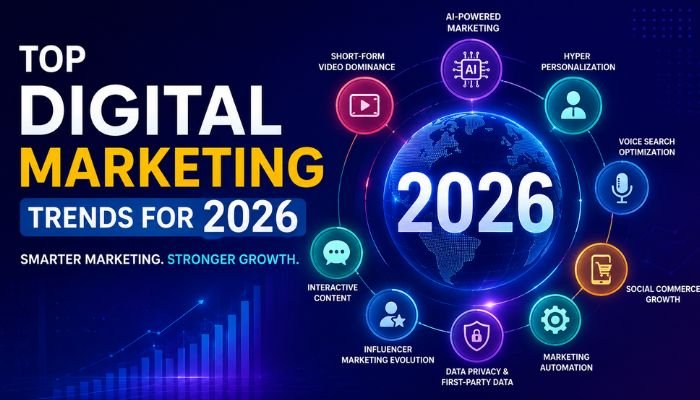
Top Digital Marketing Trends for 2026
In the current business landscape, technology is evolving at an incredible pace. Therefore, understanding the Top Digital Marketing Trends for 2026 has become absolutely vital for modern organizations. Indeed, artificial intelligence, automated processes, and shifting consumer habits are reshaping how brands communicate online. Consequently, companies must adapt quickly to stay competitive in this fast-moving digital environment. Furthermore, traditional advertising channels are losing their effectiveness. Because modern consumers demand instant, personalized solutions, companies cannot rely on static campaigns. Instead, they must implement dynamic, interactive strategies that build real trust. As a result, staying updated with emerging digital trends is no longer optional for business survival. Moreover, these innovations are opening exciting growth avenues for creative brands. Specifically, smart automation helps small teams run complex campaigns effortlessly. Meanwhile, advanced analytics tools allow marketers to predict user needs with incredible accuracy. Thus, adopting these modern strategies will help you build a highly resilient, future-proof organization. What Are Digital Marketing Trends? To begin, we should define what marketing trends actually represent in simple terms. Specifically, they are the shifting patterns, technologies, and strategies that define how brands reach their audiences. Because digital platforms change constantly, these trends show where consumer attention is moving. Therefore, tracking these changes helps you avoid wasting money on outdated tactics. In addition, many different professionals must follow these shifts closely. For example, local startup founders, global ecommerce brands, and professional agencies use these patterns to plan budgets. Consequently, following these shifts ensures your messages always land where your potential buyers spend their time. Furthermore, these shifts are not just temporary tech hypes. Instead, they represent fundamental changes in how human beings discover, research, and purchase products online. Because of this, learning about these changes helps you understand modern consumer psychology much better. Overall, tracking these trends is the key to maintaining a successful online presence. Why Digital Marketing Trends Matter in 2026 First of all, market competition has reached an all-time high online. Therefore, businesses must move incredibly fast to capture consumer interest. In fact, ignoring the future of digital marketing can cause your brand to become invisible overnight. Indeed, modern buyers will quickly choose competitors who offer a smoother, faster digital experience. Secondly, customer expectations are changing very rapidly. Specifically, modern users expect brands to understand their personal needs instantly. Consequently, generic bulk advertisements can make your brand look lazy and unhelpful. Thus, implementing modern strategies helps you deliver highly personalized experiences at scale. Thirdly, massive technological shifts are altering the search and social media landscapes. For instance, smart AI interfaces are changing how people look for information online. Because of this, traditional search ranking methods are becoming much less reliable. Therefore, you must adopt new strategies to maintain your digital visibility. Finally, these innovations offer incredible opportunities for fast business growth. Specifically, early adopters of new platforms can secure massive organic reach at a very low cost. Meanwhile, they can automate repetitive tasks to save time and money. Clearly, mastering these modern trends is vital for sustainable success. How Digital Marketing Has Evolved To understand where the industry is heading, we must look at where it started. The table below displays a detailed timeline of how digital promotion has changed over the years. Marketing Era Main Focus Key Change Traditional Marketing Print, TV, Radio Broadcast messages sent to massive, untargeted audiences. Early Digital Marketing Simple Websites & Email Basic online presence, banner ads, and bulk email blasts. Social Media Marketing Community & Profiles Two-way communication, profile building, and viral content sharing. Mobile Marketing Apps & SMS Responsive designs, mobile ads, and location-based promotions. AI-Powered Marketing Automation & Chatbots Smart content creation, personalized feeds, and automated workflows. Predictive Marketing Analytics & Intent Forecasting buyer behavior using advanced algorithm models. Top Digital Marketing Trends for 2026 Currently, the industry is witnessing a massive transition toward conversational, automated, and hyper-personalized strategies. In this section, we will explore the latest digital marketing trends that are shaping the corporate world this year. Trend #1: AI-Powered Marketing First of all, AI in digital marketing is no longer a futuristic experiment. Instead, it has become the absolute engine of modern online promotion. Specifically, organizations use smart software to analyze massive datasets in seconds. Consequently, this helps teams uncover valuable customer insights that humans might miss. Furthermore, content creation has become much faster because of smart design and writing tools. For example, marketers can generate high-quality ad drafts, captions, and graphics instantly. However, human editing remains vital to keep your brand voice authentic and warm. Nevertheless, the initial creation phase is incredibly efficient now. Additionally, smart chatbots are handling complex customer interactions on corporate websites. Because these bots understand natural language, they can guide users to the right products. Meanwhile, smart systems can optimize your advertising budgets across multiple platforms in real-time. Thus, artificial intelligence dramatically improves your overall operational efficiency. Trend #2: AI Search and Search Generative Experience To begin, SEO trends 2026 are heavily shaped by generative answers in search results. Specifically, platforms like Google are displaying conversational summaries at the very top of search pages. Because of this change, users often find answers without clicking any traditional links. Consequently, this shift has changed how web publishers optimize their pages. Therefore, companies must focus on appearing inside these generative summaries directly. To explain, this strategy requires you to write highly structured, authoritative content. Moreover, voice search and natural, conversational queries are growing rapidly. Because people speak to search engines like they are talking to friends, keyword targeting has changed. Specifically, you must target complete questions and long conversational phrases. As a result, your content must offer direct, clear answers to remain visible. Trend #3: Short-Form Video Dominance Currently, video marketing trends show that short vertical videos remain the most popular content format online. Specifically, platforms like TikTok, Instagram Reels, and YouTube Shorts capture billions of views daily. Because attention spans are shorter than ever, quick video clips are highly effective. Consequently, brands are investing heavily in producing vertical video content. For example, simple three-second hooks are used to stop users from swiping past. In
Read More
Content Marketing: Beyond the Written Word
In the current digital age, standard business promotion is shifting at an incredible speed. Therefore, mastering Content Marketing: Beyond the Written Word has become a vital requirement for modern organizations. Indeed, long text documents like blogs and articles are no longer the only way to reach your audience [3]. Instead, modern companies use videos, podcasts, and infographics to capture consumer interest in 2026 [3]. Consequently, successful brands are building immersive multimedia experiences to communicate with their potential buyers. Because modern buyers prefer visual and auditory media, reliance on text alone can limit your brand’s growth [3]. For example, short vertical videos and audio stories are growing faster than traditional text documents. As a result, companies must expand their content creation methods to remain competitive and visible online [3]. Moreover, advanced artificial intelligence helps organizations manage these diverse media channels very easily. Specifically, modern software tools can automate transcription, video editing, and graphic design in seconds. Thus, this technological evolution helps small teams create highly advanced content experiences. In this detailed guide, we will explore how you can build a successful multimedia presence [3]. What Is Content Marketing? To begin, we should define what content marketing actually represents in simple terms. Specifically, it is the practice of sharing helpful, relevant, and interesting media to attract and retain customers. Because you are sharing valuable resources, you do not need to use aggressive sales pitches. Therefore, this strategy focuses on building long-term trust rather than chasing quick, temporary transactions. In 2026, companies use many different formats to keep their audience informed, engaged, and supported. First, they publish educational guides to answer common questions from potential buyers. Secondly, they distribute product videos to showcase how their tools solve specific real-world problems. Furthermore, they use direct digital newsletters to build a secure community of loyal fans over time. Meanwhile, they use interactive calculators to help buyers calculate their potential cost savings. Thus, these diverse formats help organizations guide users through every step of their buying journey. Why Content Marketing Matters in 2026 First of all, consumer behavior has shifted dramatically because of modern digital distractions. Therefore, capturing and holding customer attention has become a massive challenge for online brands [2, 3]. In fact, ignoring content marketing trends 2026 can cause your brand to lose its digital visibility. Indeed, modern users will quickly scroll past standard text ads that offer zero value. Secondly, human attention spans are shorter than they have ever been. Consequently, modern buyers expect to receive helpful information in highly visual, easily digestible formats. Thus, implementing visual content marketing helps you deliver your core message in just a few seconds. For instance, a simple infographic can explain a complex industry report much faster than a ten-page PDF file. Thirdly, the rise of conversational search engines is changing how people look for answers online. Specifically, smart systems are summarizing text content directly inside search results. Because of this, traditional website click-through rates are decreasing. Therefore, you must create unique multimedia content that smart engines cannot easily replace. Finally, these innovations offer incredible opportunities for fast, organic business growth. Specifically, video and audio platforms allow you to connect with global audiences on an emotional level. Meanwhile, they help you build deep, lasting customer trust that drives consistent sales. Clearly, mastering these modern media formats is vital to building a highly resilient brand today. Expanding your media mix is essential as the top digital marketing trends for 2026 shift toward more immersive and visual-first experiences The Evolution of Content Marketing To understand where the industry is heading, let us analyze how content sharing has changed over time. The table below displays a detailed timeline of how media formats have evolved. Content Era Main Format Key Change Print Content Magazines & Brochures Physical paper documents sent to large, untargeted geographic regions. Blog Content Websites & Articles Basic online articles, search keyword targeting, and simple hyperlinks. Social Media Content Status Updates & Photos Two-way visual discussions, community profiles, and quick photo updates. Video Content Youtube, Reels & TikTok High visual engagement, vertical clips, and mobile-friendly storytelling. Interactive Content Quizzes & Calculators Active user participation, personalized results, and real-time feedback. AI-Powered Content Smart Feeds & Personalization Automatically customized media feeds based on individual user behaviors. Content Marketing: Beyond the Written Word Currently, modern organizations are realizing that text alone is not enough to maintain a successful digital presence. In this section, we will explore why Content Marketing: Beyond the Written Word has become the absolute standard for online growth. First, people learn and process information in many different ways. Specifically, some users are visual learners who prefer detailed graphs and video guides. Conversely, other users are auditory learners who enjoy listening to business podcasts during their daily commute. Therefore, using multiple formats ensures that your message reaches every type of buyer. Secondly, relying on multiple media formats makes your brand highly resilient. For example, if search algorithms change, your video and podcast channels will continue to drive traffic. Consequently, you can maintain a steady flow of interested leads without depending on a single platform. Thus, a diverse multimedia strategy protects your business from sudden algorithm updates. Finally, different platforms favor different media formats. Specifically, social media apps push video clips, while professional networks favor detailed PDF slideshows. Therefore, you must translate your core ideas into multiple formats to succeed on different channels. This process helps you maximize the overall reach and impact of your content. Types of Modern Content Marketing To help you design a balanced media strategy, let us look at the main options available today. The table below displays the key types of modern digital content marketing. Content Type Purpose Best Use Case Blog Posts Educate readers and rank for organic search terms. Answering basic industry questions in detail. Videos Capture attention and demonstrate complex products visually. Showcasing product tutorials and customer reviews. Podcasts Build deep brand authority and connect through audio. Hosting interviews with respected industry experts. Infographics Explain complex statistics in a simple visual format. Summarizing annual industry research reports. Webinars Gather warm business leads and offer
Read More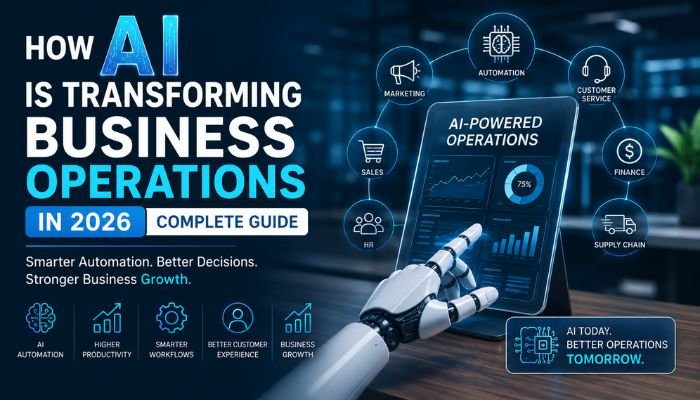
How AI Is Transforming Business Operations in 2026
In the current global market, technology is evolving at an incredible speed. Therefore, understanding How AI Is Transforming Business Operations in 2026 has become absolutely vital for modern organizations. Indeed, smart machines are no longer just a futuristic prediction [2]. Instead, they are actively running essential workflows, optimizing daily schedules, and cutting operating costs for companies worldwide [1, 2]. Consequently, digital marketing, sales, and manufacturing departments are undergoing massive structural shifts [3]. Because of these shifts, organizations can now automate repetitive tasks with very little human effort. For example, software can handle customer data entries, manage inventory levels, and write weekly business reports instantly. As a result, team members have more free time to focus on creative strategy and human connections. Moreover, these digital solutions are opening exciting growth opportunities for creative companies. Specifically, smart systems can analyze massive data sets to help managers make accurate decisions in seconds. In addition, they significantly improve the customer experience by offering personalized help around the clock. Thus, adopting these modern systems is the key to building a highly competitive, resilient organization. What Is AI in Business Operations? To begin, we should define what artificial intelligence in business actually means in simple terms. Specifically, it is the process of using smart software models to handle daily company tasks. Because these systems learn from historical data, they can perform tasks that previously required human thought. Therefore, this technology acts as a highly efficient assistant for your entire workforce. In 2026, companies use ai powered business solutions to manage many different administrative processes. First, they use smart tools to organize customer databases and track sales pipelines automatically. Secondly, they use predictive algorithms to schedule machinery maintenance in busy manufacturing plants. Furthermore, they rely on automated software to audit financial expenses and detect billing errors. Meanwhile, they use interactive platforms to guide new employees through their first week of training. Thus, these diverse tools help organizations run their daily operations with incredible speed and accuracy. Why AI Matters More Than Ever in 2026 First of all, market competition has reached an all-time high across every industry. Therefore, companies must move quickly to capture consumer interest and retain their market share. In fact, ignoring ai business transformation can cause your brand to fall behind your competitors. Indeed, modern buyers will quickly choose businesses that offer faster, highly automated digital experiences. Secondly, customer expectations are changing much faster than ever before. Specifically, modern users expect brands to understand their personal needs and answer questions instantly. Consequently, traditional, slow customer service methods can make your business look lazy and unhelpful. Thus, implementing modern automated tools helps you deliver immediate, personalized support at any hour. Thirdly, the sheer volume of digital data that companies collect is truly massive. However, human managers cannot analyze millions of database rows quickly or accurately. Therefore, you must use smart algorithms to process this information and uncover hidden operational trends. As a result, your company can turn raw data into highly profitable business plans. Finally, rising labor and resource costs are creating a massive demand for automation. Specifically, companies must optimize their resource spending to maintain healthy profit margins. Consequently, automated workflows have transitioned from optional tech tools to absolute business survival requirements. Clearly, adopting these modern systems is vital to secure your company’s long-term growth. How AI Is Transforming Business Operations in 2026 Currently, How AI Is Transforming Business Operations in 2026 is the central focus of modern corporate planning. In this section, we will analyze the overall impact of smart systems on standard company workflows. First, the integration of smart tools is breaking down traditional barriers between different departments. Specifically, data can now flow between marketing, sales, and customer service teams completely automatically. Consequently, this deep connectivity creates a unified source of truth for your entire workforce. Thus, your business operations run much faster and with significantly fewer communication errors. Secondly, we are witnessing a massive transition toward fully autonomous digital workflows. Specifically, modern tools can handle complex multi-step processes without requiring human clicks at each step. For example, a system can automatically identify a low inventory item and order it from suppliers. Therefore, your daily logistics can run smoothly in the background while you focus on expansion. Finally, smart technology is helping leaders make highly accurate, data-driven decisions. Specifically, predictive models can run simulations of major corporate choices to forecast potential results. This reduces the risk of making costly mistakes during product launches or market expansions. Thus, artificial intelligence serves as a highly reliable guide for your company’s future direction. Key Areas Where AI Is Used in Business To help you understand this transition better, let us examine where these systems are applied. The table below displays how different departments utilize ai in business operations. Business Function AI Application Business Benefit Marketing Predictive copy generation & audience division Higher ad click rates and lower customer acquisition costs. Sales Automated lead grading & customer profiling Shorter sales cycles and increased closed deal values. Customer Service Intelligent chat systems & instant translation Lower customer wait times and improved satisfaction scores. HR Automated resume filtering & digital training Faster candidate hiring times and better employee fit. Finance Fraud alerting & automated expense auditing Reduced financial losses and highly accurate tax records. Supply Chain Automated logistics planning & stock alerts Lower shipping fees and optimized inventory storage. Operations Smart process alerts & digital calendars Fewer manual administrative errors and high team speed. Analytics Predictive behavior models & data summaries Clear, highly actionable data insights for leadership teams. AI in Marketing Operations First, modern digital marketing requires a very high level of personalization. Therefore, companies use ai tools for businesses to study how their potential buyers behave online. For example, these tools can track what articles a user reads on your official blog. As a result, the system can automatically deliver tailored product suggestions to that specific user. Moreover, content creation has become much faster because of smart design and writing assistants. For instance, marketers can generate high-quality social captions and ad graphics in just a few seconds. However,
Read More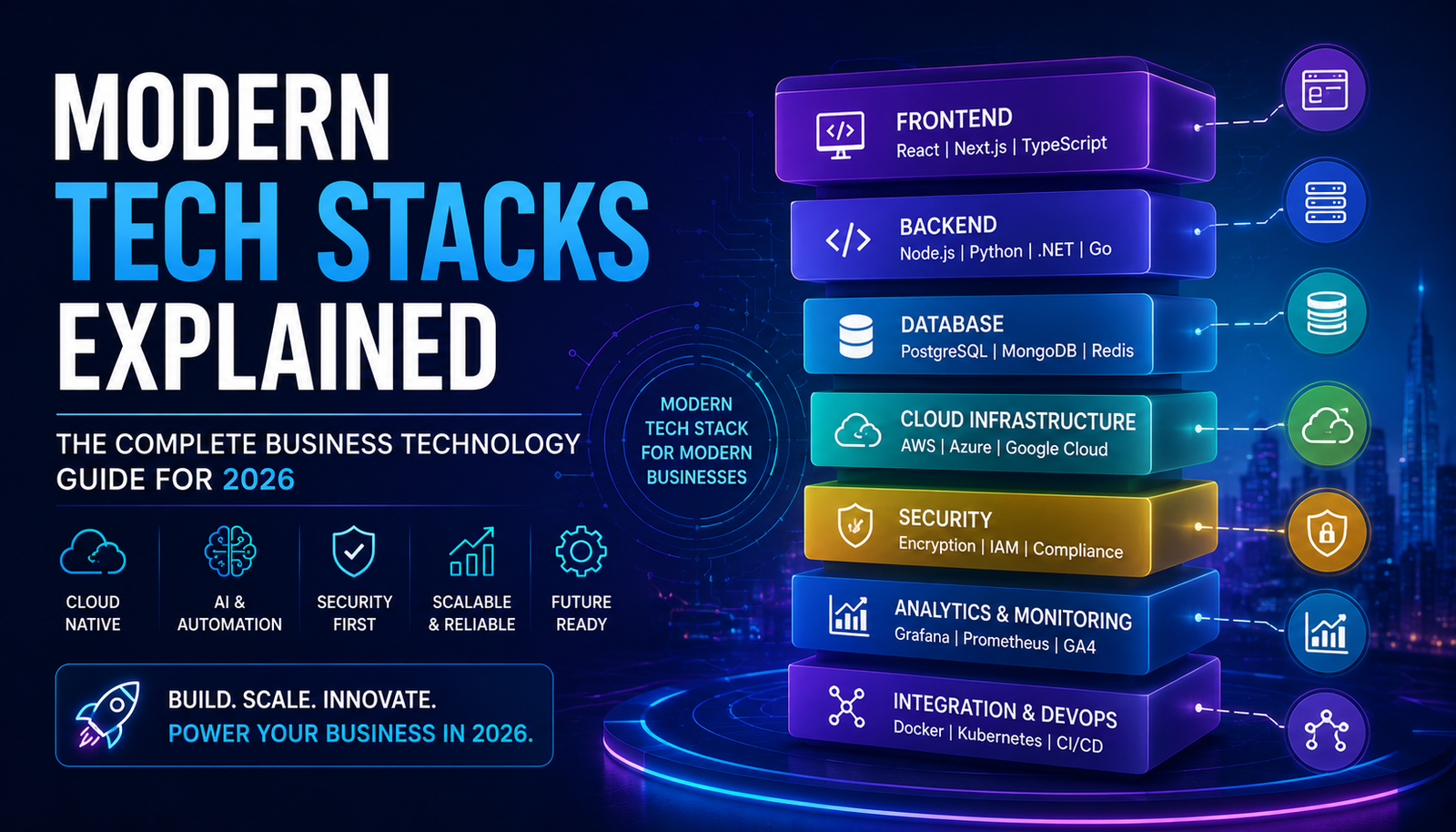
10 Modern Tech Stacks Explained
The baseline for digital infrastructure has undergone a fundamental shift. Today, a tech stacks is no longer just an administrative arrangement of operating systems, databases, and web servers. In 2026, the global web development market has reached approximately $88 billion, growing at a compound annual rate of nearly 9% [1]. This growth is accompanied by a massive architectural shift: over 84% of developers now integrate AI-powered tools directly into their development and deployment pipelines. Selecting and managing the right business technology stack has evolved from an isolated IT decision into a core driver of business performance, directly influencing customer experience, system security, and operational overhead. Choosing an incompatible or outdated architecture can quickly lead to high maintenance costs, developer burnout, and slow release cycles. Conversely, a highly optimized, modern architecture enables organizations to scale services quickly, leverage real-time data, and seamlessly deploy intelligent capabilities. This guide provides an exhaustive, practical breakdown of modern tech stacks in 2026. Whether you are building a lightweight startup product or modernizing a complex enterprise system, this analysis covers the architectural patterns, components, real-world examples, and step-by-step decision frameworks required to build a highly competitive digital foundation. Table of Contents Introduction Anatomy of a Modern Tech Stack The Client-Side (Frontend Layer) The Server-Side (Backend Layer) The Data & Storage Layer The API & Integration Layer Cloud Infrastructure & DevOps Layer Cognitive & AI Integration Layer Architectural Patterns: Monoliths, Microservices, and Edge Monolithic Architecture Microservices Architecture Serverless Architecture Edge Computing Architectural Pattern Comparison Matrix Real-World Tech Stack Examples The B2B SaaS Startup (Optimized for Speed & Efficiency) High-Growth Fintech App (Optimized for Security & Compliance) The Enterprise E-Commerce Engine (Optimized for Scalability) The AI-First SaaS Stack (Optimized for LLM Workflows) Step-by-Step Workflow: Choosing & Evaluating Your Tech Stack Requirements Discovery & Technical Trade-offs Creating Architectural Decision Records (ADRs) Security, Regulatory, and Compliance Mapping Talent Pool Viability & Ecosystem Support Calculating Total Cost of Ownership (TCO) Technology Decision Matrix Business Benefits of Stack Modernization Challenges & Pitfalls: Navigating Legacy Debt Future Trends Beyond 2026 Comprehensive Glossary of Modern Tech Terms Frequently Asked Questions (FAQs) Conclusion Anatomy of a Modern Tech Stack A modern software architecture consists of multiple specialized layers. Unlike the rigid, vertical setups of the past, today’s applications rely on modular components that communicate through highly structured APIs. codeCode ┌─────────────────────────────────────────────────────────┐ │ Frontend Layer │ │ (Next.js 15, Svelte 5, React Native, Tailwind) │ └────────────────────────────┬────────────────────────────┘ │ (HTTPS / WSS / gRPC) ┌────────────────────────────▼────────────────────────────┐ │ API Gateway │ │ (GraphQL, Envoy, Kong, REST) │ └────────────────────────────┬────────────────────────────┘ │ ┌────────────────────────────▼────────────────────────────┐ │ Backend Services │ │ (Node.js/TypeScript, Go, Rust, Python) │ └────────────┬───────────────┬───────────────┬────────────┘ │ │ │ ┌────────────▼────┐ ┌───────▼──────┐ ┌─────▼────────────┐ │ Relational DB │ │ NoSQL / Cache│ │ Vector DB (RAG) │ │ (PostgreSQL) │ │ (Redis/Valkey)│ │ (Qdrant, Milvus) │ └─────────────────┘ └──────────────┘ └──────────────────┘ Below is a detailed analysis of the core layers that make up a contemporary software platform. The Client-Side (Frontend Layer) The frontend layer is responsible for rendering user interfaces, managing client-side state, and ensuring smooth user interactions. In 2026, frontend technologies prioritize fast rendering and reducing client-side execution overhead through strategies like hybrid rendering and partial hydration. React 19 & Next.js 15+: React continues to be a widely adopted frontend ecosystem. With the widespread adoption of the React Compiler, manual memoization (such as useMemo and useCallback) is largely automated. Next.js remains a leading meta-framework, utilizing Server Components and Server Actions to bridge frontend interfaces and database queries while keeping the client bundle small. Vue 3 & Nuxt: Nuxt provides a highly productive developer experience with automated routing, state management, and excellent support for static site generation (SSG) and server-side rendering (SSR). Svelte 5: Utilizing “Runes” for fine-grained reactivity, Svelte 5 avoids the virtual DOM entirely, compiling code into highly efficient, direct DOM updates. This makes it an excellent choice for performance-sensitive and interactive dashboard applications. Tailwind CSS & Utility-First Styling: Tailwind CSS remains a dominant styling solution. It is often paired with modern build engines like Vite and Rolldown to optimize CSS delivery and eliminate unused styles during compile time [2]. Frontend Rendering Strategies Choosing the right rendering model directly affects Core Web Vitals, initial load speeds, and search engine optimization (SEO). Rendering Strategy Mechanism Best Use Cases Pros Cons Server-Side Rendering (SSR) Pages are generated dynamically on the server for each request. Dynamic e-commerce sites, user dashboards. Up-to-date data, fast First Contentful Paint (FCP). Higher server load, potential latency under high traffic. Static Site Generation (SSG) Pages are compiled into static HTML files at build time. Documentation portals, public blogs, marketing landing pages. Extremely fast load times, low hosting costs, secure. Build times grow with site size; not suitable for real-time data. Incremental Static Regeneration (ISR) Static pages are regenerated in the background on a schedule or via webhooks. Large catalog sites, news publications. Combines the speed of SSG with the dynamic updates of SSR. Complex caching invalidation workflows. Resumability (e.g., Qwik) Eliminates hydration by serializing the application state into HTML and loading JavaScript execution on demand. High-traffic mobile-first web applications. Instant time-to-interactive (TTI) regardless of page complexity. Smaller ecosystem, requires learning new architectural paradigms. The Server-Side (Backend Layer) The backend handles core business logic, user authentication, data processing, and integration with databases and third-party APIs. Node.js & TypeScript: JavaScript and TypeScript remain foundational for web services, representing a significant portion of developer activity [2]. Frameworks like NestJS provide highly structured, enterprise-grade architectures, while minimalist setups like Fastify offer high-throughput routing. Go (Golang): Prized for its extreme efficiency, low memory footprint, and native concurrency primitives (goroutines). Go is widely used to build microservices, high-traffic API gateways, and distributed cloud-native utilities. Rust: Increasingly chosen for core infrastructure, high-performance data processing, and system tools due to its memory safety without a garbage collector. Companies use Rust to optimize critical paths where latency must be kept to a minimum. Python: Driven by the massive growth in AI and machine learning engineering, Python remains highly relevant. Modern frameworks like FastAPI leverage Python’s type hints to generate clean, highly performant asynchronous APIs that connect easily to vector databases and machine learning runtimes. The Data & Storage Layer Choosing a data layer is no
Read More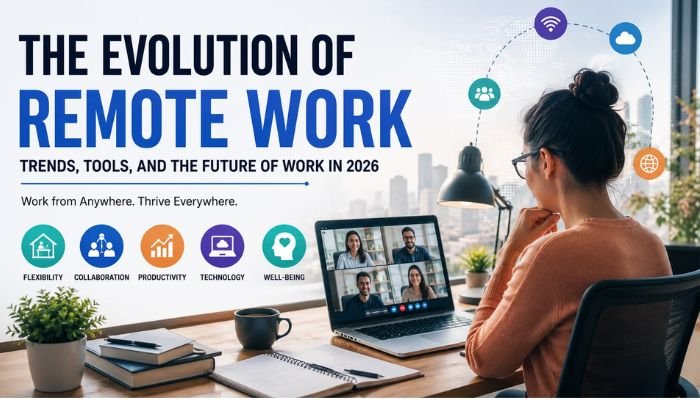
The Evolution of Remote Work: Trends, Tools, and the Future of Work in 2026
The corporate landscape of 2026 has witnessed a major stabilization in how, where, and when professional work is conducted. Over the past decade, the conceptual framework of employment has shifted from a rigid physical presence in centralized office buildings to a highly dynamic, digitally mediated ecosystem. What was once treated as an emergency survival tactic has matured into a core architectural pattern for the global labor market[1]. Today, the evolution of remote work is no longer defined by simple work-from-home experiments. Instead, it is governed by structured distributed systems, advanced artificial intelligence integrations, and formalized workplace models[2]. For executive teams, HR leaders, and engineers, navigating the complexity of modern workplace dynamics requires moving past outdated generalizations. Recent data indicates that among remote-capable roles, the hybrid work model has become the primary standard, with over 52% of employees working in a combined home-and-office capacity[3]. Conversely, companies that insist on full-time, on-site mandates find themselves facing distinct hurdles: on-site job postings take roughly 41% longer to fill than hybrid or remote equivalents[4]. Understanding this structural transformation is essential for organizations aiming to build resilient, high-performing teams. This guide provides an in-depth analysis of the history, metrics, technologies, advantages, risks, and cultural shifts defining the future of remote work in 2026. Table of Contents Introduction The Historical Trajectory: How We Got Here The Remote Work Landscape in 2026: Core Statistics and Realities The Triple Benefits of Remote Work: Individual, Organizational, and Societal The Realities and Hurdles: Ongoing Challenges of Distributed Work The Technology Ecosystem: Modern Remote Work Tools of 2026 The AI Revolution: Supercharging Distributed Teams The Hybrid Work Model: Standardizing the Flexible Schedule Productivity vs. Presence: Rethinking Performance Metrics Asynchronous Team Collaboration: Workflows and Protocols Real-World Case Studies: How Forward-Thinking Companies Succeed Future Trends: What Lies Beyond 2026 Comprehensive Glossary of Distributed Work Terms Frequently Asked Questions (FAQs) Conclusion The Historical Trajectory: How We Got Here The evolution of remote work can be understood through distinct developmental phases, each marked by specific technological milestones and macroeconomic forces. ┌────────────────────────────────────────────────────────┐ │ Pre-2020: The Era of "Telecommuting" │ │ • Rare privilege, restricted to niche tech roles │ └───────────────────────────┬────────────────────────────┘ │ ┌───────────────────────────▼────────────────────────────┐ │ 2020–2022: The Crisis Transition │ │ • Rapid, uncoordinated adoption of work-from-home │ └───────────────────────────┬────────────────────────────┘ │ ┌───────────────────────────▼────────────────────────────┐ │ 2023–2024: The Return-to-Office Friction │ │ • Pushback from executives, security struggles │ └───────────────────────────┬────────────────────────────┘ │ ┌───────────────────────────▼────────────────────────────┐ │ 2025–2026+: The Standardized Hybrid Era │ │ • Data-driven hybrid policies, integrated AI workflows │ └────────────────────────────────────────────────────────┘ The Telecommuting Origin (Pre-2020) Prior to 2020, remote work—often termed “telecommuting”—was largely an exception[5]. Pioneered conceptually in the 1970s by Jack Nilles as a solution to traffic congestion and fuel crises, the early models were limited by dial-up internet and basic telephone networks. By the mid-2010s, broadband expansion, early cloud infrastructure (SaaS), and messaging systems like Slack allowed some startups and technology organizations to trial distributed structures. However, traditional corporations maintained the core belief that physical presence was directly linked to oversight, accountability, and team culture[5]. The Force-Multiplier Period (2020–2022) The arrival of the COVID-19 pandemic accelerated decades of digital evolution into a matter of weeks[5]. Millions of organizations were forced to migrate to work from home trends overnight. Videoconferencing tools like Zoom and Microsoft Teams quickly became the central operating platforms for distributed teams[6]. This phase was defined by high flexibility, but also significant friction: teams struggled with Zoom fatigue, fragmented communication, inadequate home office setups, and blurred lines between professional and personal life[7]. The Friction and Return-to-Office Push (2023–2024) As immediate health concerns decreased, a clear divide opened between executive leadership and the workforce. Eager to maximize real estate investments and restore traditional oversight, many legacy organizations enforced rigid return-to-office (RTO) mandates. This period was marked by high-profile corporate announcements, employee petitions, and quiet quitting. Distributed teams realized that a simple copy-paste of on-site practices into digital spaces led to continuous back-to-back video meetings, micromanagement, and a decline in productivity. The Era of Standardized Hybrid Integration (2025–2026) In 2026, the workplace has reached a mature, data-driven equilibrium[6]. The debate is no longer about whether flexibility should exist, but how to structure it sustainably[8]. Organizations have formalized clear policies, utilizing specialized remote work tools, objective outcome-based tracking, and deep AI support to bridge the physical-digital divide[9][10]. The workforce has settled into a structured multi-tier framework, prioritizing async communication over endless real-time coordination[11]. The Remote Work Landscape in 2026: Core Statistics and Realities Understanding the modern distributed workforce requires analyzing empirical data rather than relying on standard corporate messaging. The following figures paint a clear picture of the workforce landscape in 2026. Primary Distribution of Remote-Capable Roles According to global data collected in early 2026, the allocation of full-time, remote-capable employees has stabilized[3]: 52% Hybrid: Employees divide their work week between remote environments and corporate offices[3]. 26% Exclusively Remote: Employees operate completely out-of-office, utilizing home spaces or co-working centers[3]. 22% Exclusively On-Site: Employees perform their tasks entirely within physical company buildings[3]. codeCode U.S. Remote-Capable Work Location Distribution (Gallup 2026): ┌──────────────────────────────────────┬──────────────────┬──────────────┐ │ Hybrid │ Fully Remote │ Fully On-Site│ │ 52% │ 26% │ 22% │ └──────────────────────────────────────┴──────────────────┴──────────────┘ The Real Value of Workplace Flexibility The economic value of flexible arrangements is now well established. Research led by Nicholas Bloom of Stanford University indicates that workers value hybrid setups at roughly 8% of their salary[12]. This premium has shaped recruitment and retention metrics: 40% of employees report they would begin searching for a new position if flexible arrangements were removed[12]. 29% of workers would actively plan to exit their role if forced to return to fully on-site arrangements[7]. Only 16% of professionals list a fully in-office role as their ideal working setup[13]. Job Market Discrepancy While demand for flexible arrangements remains high, the overall layout of new job postings has shifted toward on-site requirements[14]. Data from Robert Half indicates that across all newly listed roles (including those that are not remote-capable, such as retail, clinical, and physical services), 77% of postings are fully on-site, 19% are hybrid, and 4% are fully remote[14]. This disparity has led to intense competition for highly flexible roles, with candidate application volumes for fully remote roles vastly outstripping
Read More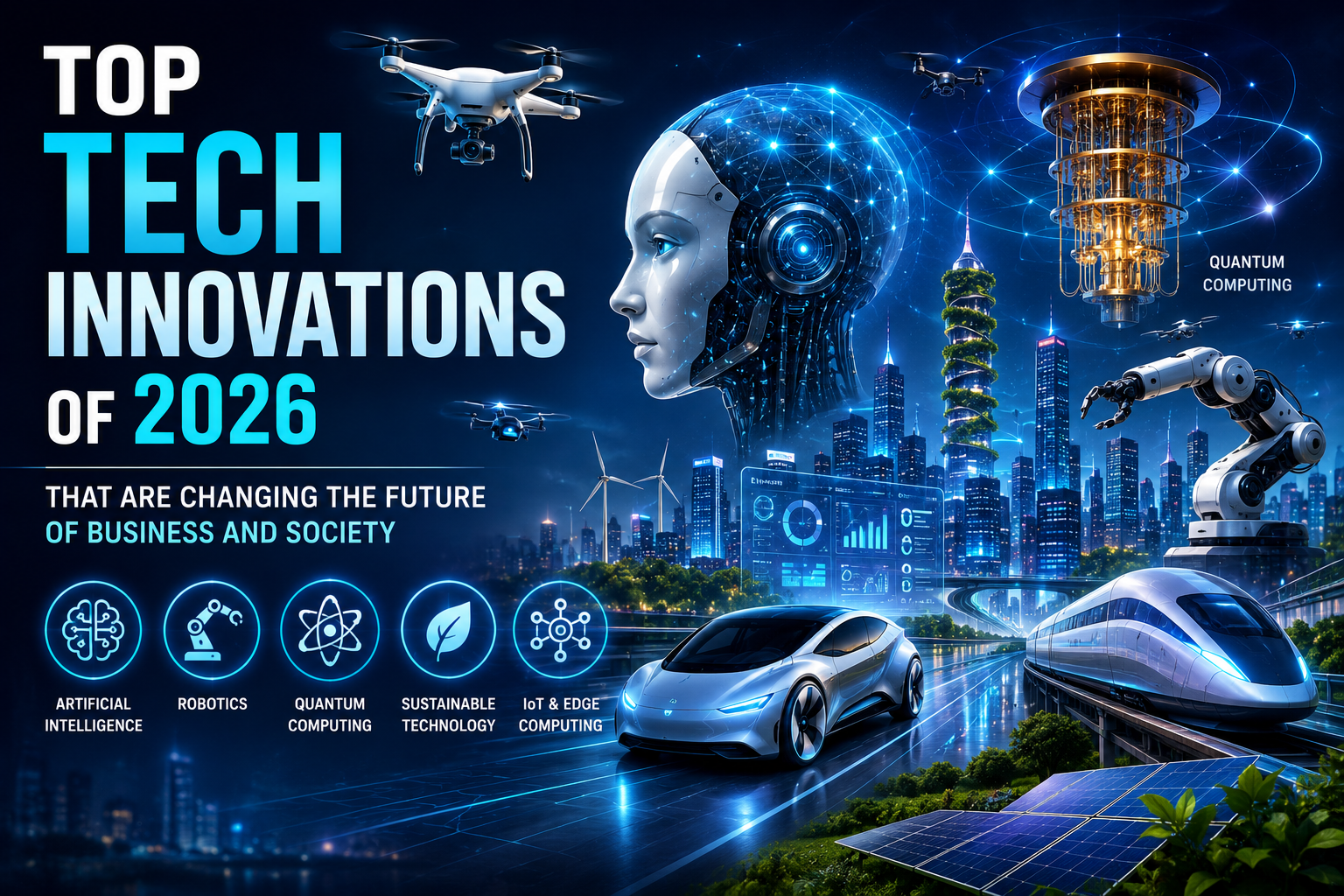
Top 5 Tech Innovations of 2026 That Are Changing the Future of Business and Society
The relationship between business, technology, and society has reached a unique point of convergence in 2026. Digital infrastructure is transitioning from static, human-operated systems into active, autonomous ecosystems. Emerging innovations are no longer confined to localized lab experiments or experimental software tools; they have integrated directly into core global supply chains, financial markets, and daily administrative workflows. Driven by a combination of high-throughput computing, specialized hardware, and urgent environmental demands, the top tech innovations of 2026 represent a major shift in systemic design. Over 84% of international enterprises have moved past basic generative AI tools to establish active agentic workflows, while physical robotics and edge networks are bridging the gap between digital processing and real-world environments. For organizational leaders, investors, and policymakers, understanding these changes is essential. Navigating this landscape requires a deep look into the mechanics of these systems to assess their viability, performance limits, and societal impacts. This comprehensive guide provides an objective, analytical breakdown of the future technology trends and innovations shaping our world in 2026. Table of Contents Introduction The Shift to Agentic Systems: The Evolution of AI Innovations Embodied AI and Intelligent Robotics: The Rise of Polyfunctional Humanoids Realizing Quantum Advantage: Computing Beyond Silicon Ambient Intelligence and Edge AI: Processing at the Source Biotech and Synthetic Biology: Engineering the Human Experience Green Technology and the Clean Energy Transition Autonomous Logistics and Transportation Networks Comparison of Emerging Technology Lifecycles Step-by-Step Business Playbook for Integrating Next-Generation Technologies The Broader Societal and Ethical Implications of Technology Trends Technical Demonstrations: Architectures of 2026 Innovations Edge AI Inference Engine Architecture Quantum Simulation Logic using Python Multi-Agent Orchestration Framework Config Comprehensive Glossary of Emerging Technology Terms Frequently Asked Questions (FAQs) Conclusion The Shift to Agentic Systems: The Evolution of AI Innovations The AI landscape of 2026 has transitioned from passive, chat-based interfaces toward active, multi-agent frameworks that execute complex, multi-step workflows with minimal human oversight[1][2]. ┌────────────────────────────────────────────────────────┐ │ The Progression of AI Systems │ ├───────────────────┬──────────────────┬─────────────────┤ │ 2023–2024 │ 2025 │ 2026+ │ │ "Co-pilots" │ "Agentic Tools" │ "Multi-Agents" │ │ • Text generation │ • Basic APIs │ • Self-governed │ │ • Static prompts │ • Email automation│ • Dynamic loops │ │ • Manual feedback │ • Task triggers │ • Tool creation │ └───────────────────┴──────────────────┴─────────────────┘ From Interactive Prompts to Autonomous Action Loops Early AI tools operated strictly on a prompt-and-response basis, relying on human operators to manually copy and paste outputs between different software platforms. Today, modern agentic systems run on continuous execution loops: Objective Formulation: The user defines a high-level goal (e.g., “Audit our regional supply chain for carbon inefficiencies and recommend alternative logistics providers”). Autonomous Planning: The agent breaks the goal down into sequential tasks, writing custom code, queries, and API scripts to gather the necessary data. Dynamic Execution: The system queries internal ERP databases, parses vendor PDF contracts, and retrieves global carbon index data. Self-Correction: If an API call fails or a data format is incorrect, the agent analyzes the error, updates its code, and runs the query again without requiring human intervention. Multi-Agent Orchestration and Collaborative Problem Solving Instead of relying on a single, monolithic model to handle all operations, modern AI architectures use networks of specialized, cooperative agents[3]. The Orchestrator Agent: Manages the overarching workflow, translating complex user goals into tasks, allocating resources, and resolving conflicts between systems. The Analyst Agent: Focuses on data retrieval, parsing raw files, and performing statistical analysis. The Compliance Agent: Constantly audits the actions and outputs of other agents to ensure they align with strict corporate governance policies and privacy standards. The Emergence of Solo, Automated Enterprises This shift in AI capabilities has changed the economics of early-stage startups[1]. A single founder can now run and scale a profitable micro-business by managing a team of automated digital employees. These agentic networks can handle user acquisition, customer support, software engineering, and content generation autonomously, allowing small teams to compete directly with traditional, mid-sized organizations[1]. Embodied AI and Intelligent Robotics: The Rise of Polyfunctional Humanoids In 2026, robotics has moved beyond rigid, pre-programmed industrial arms to embrace adaptable, polyfunctional humanoid systems powered by advanced “physical AI” models[3][4][5]. codeCode ┌─────────────────────────────────────────────────────────┐ │ Physical AI Stack │ ├─────────────────────────────────────────────────────────┤ │ • Task Instruction ("Stack those boxes onto Palette B") │ │ • Multi-Modal Foundation Model (Vision-Language-Action) │ │ • Dynamic Pathfinding & Spatial Mapping (LiDAR, Cameras) │ │ • Real-Time Joint Torque Adjustment (Force Feedback) │ └─────────────────────────────────────────────────────────┘ The Transition to Polyfunctional Humanoid Robotics Traditional factory robots were designed for highly repetitive tasks within sterile, predictable environments. Introducing an unmapped obstacle or changing a box’s orientation would cause the entire system to stop. Modern humanoids use Vision-Language-Action (VLA) models to operate safely and effectively in unstructured, dynamic environments: Generalist Hand-Eye Coordination: Advanced robots can identify, sort, and handle highly varied objects—from heavy metal parts to delicate glass bottles—without requiring custom programming for each item. Spatial Mapping: Using a combination of onboard LiDAR, stereoscopic cameras, and tactile sensor arrays, humanoids construct real-time 3D maps of their surroundings, allowing them to navigate busy warehouse floors and crowded workspaces safely. Force Feedback Control: Sensors in the robot’s joints measure resistance thousands of times per second, allowing the system to adjust its grip strength dynamically to avoid damaging delicate items. Key Humanoid Platforms of 2026 Figure 03: A highly advanced general-purpose humanoid designed to handle complex logistics, assembly, and maintenance tasks alongside human workers. Tesla Optimus Gen 3: Engineered for mass manufacturing, this platform is widely used to optimize repetitive materials-handling workflows within large automotive factories. Boston Dynamics Atlas (Electric): Known for its exceptional agility and precise torque control, this fully electric system handles heavy lifting and complex movement patterns in demanding industrial environments. Realizing Quantum Advantage: Computing Beyond Silicon As traditional silicon microchips approach their physical scaling limits, quantum computing has transitioned from theoretical physics into early commercial validation in 2026[6][7]. codeCode ┌────────────────────────┐ │ Classical Computer │ │ • Relies on bits │ │ • Explores paths │ │ one by one │ └───────────┬────────────┘ │ ▼ ┌────────────────────────┐ │ Quantum Computer │ │
Read More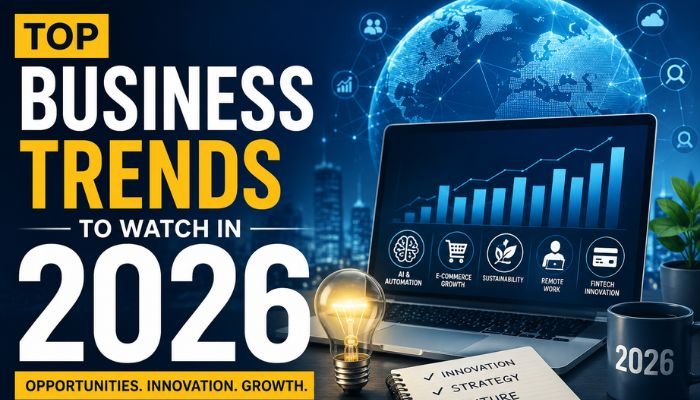
Top 10 Business Trends to Watch in 2026
The business trends landscape in 2026 is defined by a fundamental shift from experimental technology hype to deep, structural integration[1]. After years of rapid-fire development in generative artificial intelligence (AI), fluctuating macroeconomic conditions, and evolving sustainability policies, organizations are focus-shifting toward execution, resilience, and operational efficiency[1][2]. According to the International Monetary Fund (IMF), global economic growth is projected at 3.3% for 2026[3]. While inflation pressures have gradually stabilized in many major economies, the underlying business environment remains complex, characterized by geopolitical friction, localized trade shifts, and rapid regulatory changes[3][4]. Succeeding in this climate requires a proactive understanding of emerging trends, a commitment to workforce adaptability, and agile strategic planning[5][6]. This comprehensive guide analyzes the primary business trends of 2026, offering leaders, entrepreneurs, and startups actionable insights to build robust growth strategies. 1. The Macroeconomic and Geopolitical Foundation of 2026 To understand where business opportunities lie in 2026, we must first look at the macroeconomic and geopolitical forces acting as the baseline of global commerce. A Stabilizing Yet Fragmented Global Economy The global economy is expanding at a moderate pace, but the growth is far from uniform[3][4]. While the United Statescontinues to bypass a deep recession—supported by fiscal investments and strong domestic consumer demand—Western Europe experiences more subdued, recovering growth[7]. In Asia, industrial AI and smart manufacturing investments continue to scale, but supply chain diversification remains a top priority[2][8]. Business strategy in 2026 is less about chasing hyper-expansion and more about securing supply chain corridors, building financial buffers, and navigating localized economic realities[2]. codeCode [ Global GDP Growth: ~3.3% ] │ ┌────────────────────────────┼────────────────────────────┐ ▼ ▼ ▼ [ United States ] [ Western Europe ] [ Asia-Pacific ] • Stable, consumer-driven • Modest domestic recovery • Heavy industrial AI push • High infrastructure spend • Fiscal policy adaptation • Supply chain re-routing The Geopolitical Reality: From Efficiency to Resilience For decades, the standard playbook for corporate operations was maximizing efficiency by offshoring production to the lowest-cost hubs. In 2026, that playbook has been replaced. Due to persistent trade tensions, shipping bottlenecks, and shifting alliance networks, organizations are prioritizing resilience over pure cost efficiency[2]. Key concepts defining operations today include: Nearshoring & Friendshoring: Moving manufacturing and supply chain infrastructure closer to home markets or to nations with aligned geopolitical values[2]. Re-industrialization: The resurgence of domestic manufacturing in North America and Europe, heavily supported by automation and government incentives[9]. Sovereignty in Tech: Nations are increasingly demanding data localization and “geopatriation” of cloud infrastructure to protect critical state and consumer information[10]. Adapting to Policy Shifts Trade policies, tariff structures, and localized manufacturing demands mean that multi-market companies must operate with decentralization in mind. Having a singular, centralized global operating model is increasingly risky. Forward-thinking enterprises are constructing highly modular operations where regional business units possess the autonomy to shift suppliers, adjust pricing, and comply with local regulations on demand[9][11]. 2. The Agentic Leap: AI and Automation Business Trends Artificial intelligence has officially transitioned from the era of novelty chatbots to the era of Agentic AI—autonomous, workflow-native systems capable of executing multi-step business processes with minimal human supervision[12][13]. codeCode Traditional AI (2023-2024) Agentic AI (2026) ┌─────────────────────────────────────┐ ┌─────────────────────────────────────┐ │ • Single-prompt interactions │ │ • Autonomous multi-step execution │ │ │ e.g., "Draft an email" │ │ │ e.g., "Resolve billing dispute" │ │ ▼ │ │ ▼ │ │ • Relies entirely on human inputs │ │ • Orchestrates tools and systems │ │ • Disconnected from workflows │ │ • Self-updating knowledge bases │ └─────────────────────────────────────┘ └─────────────────────────────────────┘ From Chatbots to Autonomous Agents In 2026, enterprise leaders are no longer impressed by standalone LLM windows. The market has moved beyond naive Retrieval-Augmented Generation (RAG)[14]. Instead, the defining trend is the rise of Multiagent Systems—networks of specialized AI agents that communicate, delegate tasks, and collaborate to solve complex operational problems[10][11]. For example, in a customer operations department: An Intake Agent analyzes an incoming billing dispute email, parses the sentiment, and extracts the key invoice IDs. A Verification Agent queries the company’s internal ERP database to cross-reference the client’s payment history and identifies a system-side billing discrepancy. A Resolution Agent drafts an adjusted invoice, requests approval from a human supervisor for refunds over a certain threshold, and updates the CRM platform automatically. This shift to “context engineering” and workflow-native AI minimizes friction, drastically reducing the time-to-value for enterprise technology investments[12][14]. Gartner’s Top Strategic Technology Themes for 2026 Gartner’s analysis structures the top technology trends of the year into three core themes: The Architect, The Synthesist, and The Vanguard[10][15]. Key tech developments within these themes include: AI-Native Development Platforms: Software engineering teams are leveraging platforms built from the ground up for AI-human pair programming, allowing developers to focus on architecture and system integration rather than boilerplate coding[10][16]. Domain-Specific Language Models (DSLs): While generalized frontier models remain powerful, enterprises are heavily investing in smaller, highly tuned, domain-specific models tailored to legal, medical, or industrial operations to improve accuracy and control data privacy[10][16]. Physical AI: Bringing AI capability out of the digital cloud and into physical systems, enabling advanced robotics, smart grid management, and spatial computing to interact directly with the physical world[10][17]. The Rise of “New-Collar” Roles The narrative surrounding AI-related job losses is evolving[18]. While traditional administrative tasks are seeing high degrees of automation, a massive wave of “new-collar” roles has emerged to support this transition[19]. According to data compiled from LinkedIn and industry reports, some of the fastest-growing job titles of 2026 include[19]: AI Engineers & Architects: Professionals who design and deploy the orchestration layers connecting multiple models[14][19]. Forward-Deployed Engineers: Specialists who work directly on-site to integrate AI systems into legacy industry workflows[19]. Data Annotators & Context Engineers: Experts focused on preparing, structuring, and maintaining the highly curated data pools required to feed domain-specific models[14][19]. AI Governance and Security Officers: Leaders who establish frameworks to monitor autonomous agent behavior, manage bias, and ensure regulatory compliance[19][20]. Overcoming the Productivity Drag (The “AI Workslop” Challenge) Despite massive investments in AI, many organizations are realizing that simple deployment does not automatically equal profitability[21][22]. Many teams are struggling with what experts call “AI workslop”—an overabundance of AI-generated content, emails, and reports that creates a hidden
Read More
Top 10 Essential Digital Marketing Strategies for Success in 2026
The digital marketing landscape has reached a historic inflection point. The strategies, tools, and playbooks that defined the early 2020s—characterized by high-volume content production, third-party cookie tracking, and highly manual advertising campaigns—have evolved. In 2026, we are operating in a mature, AI-integrated digital ecosystem where trust, data privacy, and technological sophistication dictate market leadership. For years, digital marketing relied on standard visibility metrics: ranking on page one of Google, accumulating social media followers, and broadcasting generic email newsletters. Today, the widespread integration of large language models (LLMs), the complete deprecation of traditional tracking mechanisms, and the rise of autonomous AI purchasing agents have fundamentally altered consumer behavior. Marketers face unique challenges: The “Zero-Click” Reality: Generative search engines and AI assistants solve user queries directly on search results pages, reducing traditional organic click-through rates (CTR) by up to 58–61% for informational queries. Content Saturation and the “Average” Trap: Generative AI has made content creation effortless, leading to an explosion of generic, surface-level articles. To stand out, brands must pivot to deep, original, and experiential storytelling. Diversifying your output is essential, which is why you should explore content marketing: beyond the written word for better reach. The Death of Third-Party Cookies: Advertisers can no longer rely on cross-site tracking to target buyers. First-party data acquisition and server-side tracking are now foundational operational requirements. To achieve sustainable growth, brands must stop chasing short-term hacks and instead deploy a highly structured, integrated matrix of modern digital marketing strategies. This comprehensive blueprint breaks down the 10 essential online marketing strategies required to secure market share, drive high-intent conversions, and build enduring brand equity in 2026. The 2026 Digital Marketing Landscape: Key Trends & Statistics Before executing new campaigns, organizations must understand the empirical data shaping modern consumer channels. Strategic decisions in 2026 are guided by clear indicators of search engine evolution, privacy regulations, and video consumption habits. Staying ahead requires keeping a close eye on the top digital marketing trends for 2026 to adapt your approach High-Impact Marketing Statistics for 2026 Search Engine Shifts: AI Overviews (such as Google’s Search Generative Experience) and conversational LLM platforms process more than 45% of total search queries, significantly reducing traditional informational website traffic. A core component of any online presence is understanding the future of SEO in an AI world to maintain search visibility. Content Demands: A HubSpot survey indicates that 83% of successful marketing professionals believe prioritizing “quality over quantity” is the only viable method for driving measurable content marketing ROI in 2026. The Value of Video: Video remains a highly effective channel, with approximately 88% of marketers identifying video assets as their highest-return-on-investment media type. The Cookie Deprecation Impact: Over 90% of leading enterprise brands have fully migrated to server-side tag management and first-party data platforms to preserve tracking accuracy and comply with strict global privacy laws. Economic Scale: The global digital advertising market is projected to reach $786.2 billion, with retail media networks and mobile channels absorbing more than 54% of total promotional spending. Traditional Approach 2026 Modern Strategy Mass programmatic SEO content High-information-gain content hubs Third-party browser cookies Server-side tracking & first-party data High-volume “post & ghost” social media High-engagement social commerce Keyword-based keyword research Entity-based SEO & topical map modeling Disconnected multichannel marketing AI-automated omnichannel customer journeys Strategy 1: Generative Engine Optimization (GEO) & Next-Gen SEO Traditional Search Engine Optimization (SEO) focused on optimizing web pages for static ranking algorithms based on keyword placement, backlink profiles, and domain authority. In 2026, SEO strategies have evolved into Generative Engine Optimization (GEO). Step What Happens 1. User Query The user enters a question or search request. 2. AI Search Engine (RAG) The AI receives the query and begins processing it using Retrieval-Augmented Generation (RAG). 3. Retrieval Phase The system searches trusted, authoritative, and structured data sources to gather the most relevant information. 4. Generation Phase The AI synthesizes the retrieved information into a clear, accurate answer with citations where applicable. 5. Cited Brand Mentions & Source-Rich Output The final response includes trustworthy references, cited sources, and relevant brand mentions, improving credibility and user trust. [ User Query ] │ ▼ ┌───────────────────────────┐ │ AI Search Engine (RAG) │ └─────────────┬─────────────┘ │ ┌───────────┴───────────┐ ▼ ▼ ┌─────────────────┐ ┌─────────────────┐ │ Retrieval Phase │ │ Generation Phase│ │ (Scrapes highly │ │ (Synthesizes │ │ authoritative, │ │ answer and │ │ structured database │ citations) │ └─────────────────┘ └────────┬────────┘ │ ▼ ┌─────────────────────────┐ │ Cited Brand Mention / │ │ Source-Rich Output │ └─────────────────────────┘ Modern search engines do not merely list pages; they use Retrieval-Augmented Generation (RAG). The AI engine processes the query, retrieves data from a highly select pool of web documents, and generates a unified, natural-language response directly on the Search Engine Results Page (SERP). To drive organic traffic, your site must be selected as a citation source within these AI-generated overviews. Shift from Keywords to Entities and Topical Maps AI search engines use vector databases to evaluate the relationships between concepts, known as entities. To optimize for entity-based search: Build Comprehensive Topical Maps: Instead of writing disconnected articles targeting single search terms, construct a highly structured cluster of interlinked pages covering every aspect of a subject. Establish Clear Semantic Relationships: Use precise relational language. For instance, instead of writing “Our software helps with marketing analytics,” write “Our marketing analytics platform, [Brand Name], integrates directly with Shopify to analyze real-time sales conversion data.” This helps LLMs easily map your brand to relevant business categories. Technical Schema Markup Configuration To make your website machine-readable, schema markup is critical. Search engine crawlers rely heavily on structured data to parse and verify the authenticity of your content. Implement the following JSON-LD schemas across your platform: ProfilePage Schema: Use this to define the author’s credentials, directly supporting Google’s Experience, Expertise, Authoritativeness, and Trustworthiness (E-E-A-T) guidelines. Product and Organization Schema: Include explicit fields for pricing, availability, aggregate user reviews, and return policies to ensure inclusion in AI product comparison boxes. Example: Advanced JSON-LD Schema for an Industry Expert Author codeJSON { "@context": "https://schema.org", "@type": "ProfilePage", "mainEntity": { "@type": "Person", "name": "Sarah Jenkins", "jobTitle": "Principal Digital Strategist", "worksFor": { "@type": "Organization", "name": "Nexus Marketing Group" }, "knowsAbout": [ "Digital Marketing", "Search Engine Optimization", "First-Party
Read More
The Impact of AI on Modern Technology: How Artificial Intelligence Is Reshaping the Future
We are living in an era where technology does not just assist human decision-making; it anticipates, executes, and refines it. The impact of AI on modern technology has transitioned from an incremental progression of software efficiency to a fundamental paradigm shift[1]. In less than a decade, artificial intelligence has mutated from a back-end analytical tool into the primary interface and operating engine of global infrastructure[1][2]. Whether we look at generative design platforms, predictive diagnostics in medicine, autonomous agents executing complex multi-step supply chain decisions, or foundational models capable of reasoning across modalities, AI is no longer a localized trend[3][4]. It is the new substrate of the digital world[2]. The phrase “digital transformation” once referred to cloud migration, mobile app integration, and data centralization. Today, that definition has been overwritten by AI transformation[2][5]. Every modern application, database, and hardware stack is being re-engineered to support or integrate machine-learned cognitive capabilities[2]. To fully comprehend the depth of this transformation, we must analyze the specific mechanics of this technology, explore the sectors undergoing radical restructuring, examine the emerging challenges, and project the structural shifts that will characterize the coming decade[2][3]. This article provides a comprehensive, highly analytical examination of how AI is fundamentally rewriting the laws of technology, business, and daily human life[1]. 2. The Evolution of Artificial Intelligence: From Symbolic Rules to Generative and Agentic Paradigms To understand the impact of AI on modern technology, one must look back at its architectural evolution. The trajectory of AI can be divided into four distinct waves, each defined by how machines represent knowledge and learn from data[3]. codeCode +-------------------------------------------------------------------------+ | THE FOUR WAVES OF AI | +-------------------------------------------------------------------------+ | | | Wave 1: Symbolic AI (Rule-Based) | | - Hardcoded "if-then" logic, expert systems, brittle parameters. | | | | Wave 2: Statistical Machine Learning | | - Feature engineering, regression, SVMs, predictive classification. | | | | Wave 3: Deep Learning & Transformers | | - Neural networks, self-attention, foundation models, LLMs. | | | | Wave 4: Agentic & Multi-Agent AI (2026+) | | - Autonomous goal execution, tool use, self-correction, reasoning. | | | +-------------------------------------------------------------------------+ The First Wave: Symbolic AI and Expert Systems Historically, artificial intelligence relied on Symbolic AI—often called “Good Old-Fashioned AI” (GOFAI). These systems operated on explicit, hardcoded logic. Engineers mapped out complex “if-then” decision trees to build “expert systems.” While successful in highly constrained environments (such as basic chess engines or diagnostic flowcharts), these systems were fundamentally brittle. They could not generalize beyond their hardcoded parameters, lacked the capacity to learn from new data, and collapsed when confronted with the noise and ambiguity of real-world inputs. The Second Wave: Statistical Machine Learning The transition to statistical machine learning in the late 1990s and 2000s marked a shift from programming rules to programming learning algorithms. Instead of explicitly telling a machine how to identify a pattern, developers fed labeled datasets into algorithms like Support Vector Machines (SVMs), Random Forests, and Gradient Boosting trees. The machine learned to optimize mathematical functions to make classifications or predictions. However, this era was heavily dependent on “feature engineering”—the tedious, human-intensive process of manually identifying which variables (features) the algorithm should pay attention to. The Third Wave: Deep Learning and the Transformer Breakthrough The deep learning revolution, catalyzed by the availability of massive GPU compute and large-scale datasets (such as ImageNet), eliminated the need for manual feature engineering. Multi-layered Artificial Neural Networks (ANNs)—particularly Convolutional Neural Networks (CNNs) for vision and Recurrent Neural Networks (RNNs) for sequential data—allowed systems to learn hierarchical representations of data directly from raw pixels or text. The ultimate inflection point occurred in 2017 with the introduction of the Transformer architecture in the paper “Attention Is All You Need.” By replacing recurrence with self-attention mechanisms, Transformers allowed models to process sequence data in parallel, capture long-range dependencies, and scale to billions of parameters. This architecture laid the foundation for Large Language Models (LLMs) and modern Generative AI, enabling machines to understand, summarize, translate, and generate human-like text and code with unprecedented fluency[3]. The Fourth Wave: Agentic and Multi-Agent AI We have entered the fourth wave: Agentic AI[6][7]. While generative AI focuses on content generation and interactive search, agentic systems focus on execution[4][7]. Equipped with planning capabilities, memory, and tool integration (such as the ability to execute API calls, write and run Python scripts, browse the web, and operate desktop interfaces), autonomous AI agents do not merely answer prompts; they accomplish long-horizon goals[4][7]. This shift from passive conversational models to active, self-correcting agents represents the cutting edge of modern software design[7]. 3. Key Artificial Intelligence Innovations Reshaping Modern Systems The rapid integration of AI into contemporary software architectures is driven by several foundational artificial intelligence innovations[3]. These technologies serve as the building blocks for enterprise and consumer applications alike[2][3]. A. Multimodal Foundation Models Early AI models were highly specialized: one model processed text, another processed audio, and a third classified images. Modern foundation models are inherently multimodal[3]. Trained on heterogeneous datasets containing billions of images, audio files, videos, code repositories, and textual documents, these systems understand cross-modal relationships natively. A multimodal model can read a complex schematic diagram, generate the corresponding software control code, explain the diagram via synthetic voice, and generate a video demonstrating how the physical machine operates. This unified representation of diverse data streams has unlocked unprecedented flexibility across software interfaces. B. Retrieval-Augmented Generation (RAG) and Long-Context Windows To make LLMs useful in enterprise environments, developers had to solve the twin challenges of outdated training data and “hallucinations” (the tendency of models to invent facts). This led to the development of Retrieval-Augmented Generation (RAG). RAG acts as an intermediary layer: when a user asks a question, the system queries an external vector database containing proprietary, up-to-date documents, retrieves relevant text chunks, and feeds them to the LLM as a context anchor. Simultaneously, the dramatic expansion of model context windows—capable of holding millions of tokens—allows businesses to feed entire codebases, legal libraries, or historical financial reports directly into the active memory of the AI, yielding highly contextualized and
Read More