

English can be confusing, especially when two words look or sound almost identical, a spelling seems uncertain, or a phrase has a meaning that is not immediately obvious. From everyday texting abbreviations and common expressions to spelling mistakes and grammar questions, there are countless small language details that people encounter every day.
This ultimate guide brings together common questions about English grammar, word meanings, correct spelling, phrases, abbreviations, and everyday usage. Whether you’re wondering about IMK meaning, STG meaning, receive or recieve, input vs imput, too far or to far, deselect or unselect, knowledgeable or knowledgable, or laser vs lazer, you’ll find clear explanations and simple examples below.
El Gallo Meaning
El gallo is a Spanish phrase that literally means “the rooster” in English.
- El = the
- Gallo = rooster
Depending on context, gallo can also be used as a nickname or have a figurative meaning.
IMK Meaning
IMK commonly means “in my knowledge” in texting and online conversations.
For example:
“IMK, the store closes at 9.”
This means:
“In my knowledge, the store closes at 9.”
IMK Meaning in Text
When someone asks about IMK meaning in text, the usual interpretation is “in my knowledge.”
IMK Meaning in Chat
IMK meaning in chat is generally the same: “in my knowledge.”
What Does IMK Mean?
IMK usually means “in my knowledge.” It is used when someone wants to share information while indicating that it is based on what they know.
STG Meaning in Texting
STG commonly means “swear to God” in informal texting.
Example:
“STG, I didn’t take your phone.”
It is usually used to emphasize that someone is being serious or telling the truth.
STG Full Form in Chat
STG = Swear to God
What Does STG Mean in Text?
The most common answer to what does STG mean in texting is “swear to God.”
Context can sometimes give an abbreviation a different meaning, but this is the common informal interpretation.
FYP Meaning
FYP commonly stands for “For You Page.”
The expression is particularly associated with social-media platforms where users receive a personalized feed of recommended content.
Example:
“My video appeared on someone’s FYP.”
In this context, FYP refers to the user’s personalized recommendation page or feed.
What Does ND Mean in Text?
ND can have different meanings depending on the conversation.
Unlike abbreviations such as IMK or STG, there isn’t one universal meaning of ND in every text conversation.
The surrounding sentence is important when determining what someone means.
Receive or Recieve
The correct spelling is:
Receive ✅
Recieve ❌
A common spelling rule is:
I before E, except after C.
This helps with words such as:
- receive
- deceive
- conceive
Example
“I received your message this morning.”
Input or Imput
The correct spelling is:
Input ✅
Imput ❌
Input can be used as both a noun and a verb.
Examples
“We need your input.”
“Please input your information into the form.”
So if you’re wondering about input vs imput, the correct standard English spelling is input.
Deselect or Unselect
Both deselect and unselect can be encountered, particularly in technical contexts, but deselect is generally the clearer and more established choice for software instructions.
Example:
“Click the box again to deselect the option.”
When writing website, app, or computer instructions, deselect is usually preferable.
Signalling or Signaling
Both spellings are correct.
Signaling is commonly used in American English.
Signalling is commonly used in British English and other varieties that follow British spelling conventions.
Examples:
“The device is signaling an error.”
“The device is signalling an error.”
The meaning is identical.
Demasculate Meaning
Demasculate is an uncommon word. The much more established term is emasculate.
Emasculate can mean to deprive someone or something of strength, effectiveness, power, or traditionally masculine qualities.
For clear modern writing, alternatives such as weaken, undermine, or strip of power may be preferable.
Emasculate vs Demasculate
When choosing between emasculate vs demasculate, emasculate is the established word used in standard English.
Demasculated Meaning
Demasculated generally suggests that someone has been made to feel less masculine or has had perceived masculine power or qualities diminished. However, the term is uncommon.
Riled Up Meaning
Riled up means angry, irritated, upset, or emotionally agitated.
Example:
“The unfair decision got everyone riled up.”
Similar expressions include:
- worked up
- irritated
- angry
- upset
- agitated
Thanks for Your Patronage Meaning
“Thanks for your patronage” is a formal way of thanking a customer or supporter for choosing or supporting a business, organization, artist, or service.
For example:
“Thank you for your patronage. We look forward to serving you again.”
In everyday business communication, you can also simply say:
“Thank you for your support.”
Tieing or Tying
The correct spelling is:
Tying ✅
Tieing ❌
When tie becomes tying, the final e is removed before adding -ing.
Examples:
- tying a shoe
- tying a knot
- tying a ribbon
Lucas’s or Lucas’
For a singular name such as Lucas, Lucas’s is widely used to form the possessive.
Example:
“Lucas’s car is outside.”
Some style guides permit Lucas’, particularly in certain editorial styles. The important thing is to follow one consistent style.
Geez Louise Meaning
Geez Louise is an informal expression of surprise, frustration, annoyance, or disbelief.
Example:
“Geez Louise, that was expensive!”
It is a mild and often playful expression.
Jeez Louise Meaning
Jeez Louise is another spelling of the same expression.
Both forms can be found in informal English.
Geez Louise Origin
The exact origin is not completely certain. The expression is generally understood as a playful euphemistic expression related to religious exclamations such as “Jesus.”
How’s Everything Going?
“How’s everything going?” is a natural and friendly way to ask someone about their life, work, or general situation.
Example:
“How’s everything going at your new job?”
A natural response is:
“Everything’s going well, thanks. How about you?”
How Is Everything?
“How is everything?” is also grammatically correct.
It is a general way to ask how things are going.
Example:
“It’s been a while. How is everything?”
How Is Everything Going?
“How is everything going?” asks about the current state or progress of someone’s situation.
It is similar to:
- How are things going?
- How are you doing?
- How’s everything?
- How is life going?
To Far or Too Far
The correct phrase is:
Too far ✅
To far ❌
Use too when you mean “more than desirable” or “excessively.”
Example:
“The restaurant is too far from here.”
Use to for direction or movement:
“I’m going to the store.”
Therefore, too far or to far → too far.
Tweek or Tweak
The correct spelling is:
Tweak ✅
Tweek ❌
To tweak something means to make a small adjustment or improvement.
Example:
“We need to tweak the design before publishing it.”
Neat Whiskey Meaning
Neat whiskey means whiskey served by itself, without ice, water, or a mixer.
Example:
“He ordered his whiskey neat.”
This differs from:
- on the rocks — served with ice
- with water — diluted with water
- mixed — combined with other ingredients
If Anyone Has or Have
The correct construction is:
If anyone has… ✅
This is because anyone is grammatically singular.
Example:
“If anyone has questions, please let me know.”
Not:
“If anyone have questions…”
But:
“If they have questions, let me know.”
Here they is plural.
Acception or Exception
The correct word in ordinary modern English is:
Exception ✅
An exception is something that does not follow a general rule.
Example:
“Everyone must attend, with one exception.”
Acception is a rare word and is not normally used when you mean something excluded from a rule.
Reinforce vs Reenforce
The standard spelling is:
Reinforce ✅
Reenforce is generally not the preferred modern spelling.
Reinforce means to strengthen or make something more effective.
Example:
“The evidence reinforces the argument.”
Therefore:
reenforce vs reinforce → reinforce
Oversite vs Oversight
When you mean an accidental omission or failure to notice something, the correct word is:
Oversight ✅
Example:
“Leaving the attachment out of the email was an oversight.”
Oversite is generally not the word you want in this context.
Coming Week Meaning
The coming week generally means the next week or the week that is about to begin.
Example:
“I have several meetings scheduled for the coming week.”
Similar expressions include:
- next week
- upcoming week
- week ahead
Per Usual Meaning
Per usual is an informal expression meaning “as usual.”
Example:
“He arrived late, per usual.”
It is common in conversational English, while as usual is generally preferable in formal writing.
Impatient vs Inpatient
These words have completely different meanings.
Impatient
Impatient means unwilling or unable to wait calmly.
“She became impatient after waiting for an hour.”
Inpatient
Inpatient generally refers to someone receiving medical care while staying in a hospital or healthcare facility.
“The hospital has several inpatient rooms.”
So:
Impatient = unable to wait
Inpatient = a person receiving care while staying in a healthcare facility
Knowledgeable Spelling
The correct spelling is:
Knowledgeable ✅
Knowledgable ❌
Example:
“She is knowledgeable about digital marketing.”
Knowledgeable or Knowledgable
When choosing between knowledgeable or knowledgable, use knowledgeable.
A helpful way to remember it is:
knowledge + able = knowledgeable
How Do You Spell Laser?
The correct spelling is:
Laser ✅
Lazer ❌
The word laser originated as an acronym for Light Amplification by Stimulated Emission of Radiation.
Today, it is normally written as a regular lowercase noun.
Lazer or Laser
When deciding between lazer or laser, the correct standard spelling is:
Laser.
Example:
“The technician used a laser to scan the material.”
Looking Forward to Working With You
“Looking forward to working with you” is a common professional expression.
Example:
“Thank you for the opportunity. I am looking forward to working with you.”
The grammar is important because look forward to is followed by a noun or -ing form.
Correct:
“I look forward to working with you.”
Not:
“I look forward to work with you.”
Student’s vs Students’
These forms have different meanings.
Student’s
Student’s is singular possessive.
“The student’s book is on the desk.”
The book belongs to one student.
Students’
Students’ is plural possessive.
“The students’ books are on the desk.”
The books belong to multiple students.
Therefore:
student’s = one student
students’ = multiple students
Embedded vs Imbedded
Embedded is the standard and much more common spelling.
Example:
“The video is embedded in the article.”
Imbedded can appear as a variant in some dictionaries and contexts, but embedded is generally the preferred choice in modern professional writing.
He Is Risen Meaning
“He is risen” is a Christian expression referring to the resurrection of Jesus Christ.
It is particularly associated with Easter.
A traditional Easter greeting is:
“He is risen!”
A common response is:
“He is risen indeed!”
Unkempt or Unkept
The standard word for something messy or untidy is:
Unkempt ✅
Example:
“His hair looked unkempt.”
Unkept can occur in other contexts, but it is not normally the word used to describe a person’s untidy appearance.
Companywide or Company Wide
Companywide is generally the preferred modern closed form when used as an adjective.
Example:
“The companywide policy will begin next month.”
Company-wide can also be encountered depending on editorial style.
When choosing between company wide or companywide, companywide is generally the safer choice in contemporary professional writing.
Targetted or Targeted
The correct spelling is:
Targeted ✅
Targetted ❌
Example:
“The company launched a targeted advertising campaign.”
Trouper vs Trooper
These words have different meanings.
Trouper
A trouper can mean a dependable person who continues despite difficulties. It can also refer to a member of a theatrical troupe.
“She was a real trouper during the difficult project.”
Trooper
A trooper can refer to a member of a military or police organization.
“The state trooper stopped the vehicle.”
Therefore:
trouper = dependable person or performer
trooper = member of a military or police organization
Pricey or Pricy
Both pricey and pricy can be found in English.
Pricey is the more familiar and generally preferred spelling.
It means expensive.
“That restaurant is a little pricey.”
Therefore, if you’re choosing between pricy or pricey, pricey is usually the safer choice.
Cartel vs Mafia
A cartel and a mafia can both refer to organized criminal activity, but they are not interchangeable terms.
Cartel
A cartel can refer to an organized group that cooperates to control a market. In discussions of organized crime, the term is often used for criminal networks involved in activities such as drug trafficking.
Mafia
“Mafia” can refer specifically to the historical Sicilian criminal tradition or more broadly to organized criminal groups modeled around hierarchical, territorial, or family-based structures.
Mafia vs Cartel
The distinction depends on context, but a simple comparison is:
Cartel: often emphasizes a coordinated network involved in controlling a particular illicit trade.
Mafia: often emphasizes an organized criminal structure with territorial, hierarchical, or family-based characteristics.
Quick English Spelling Reference
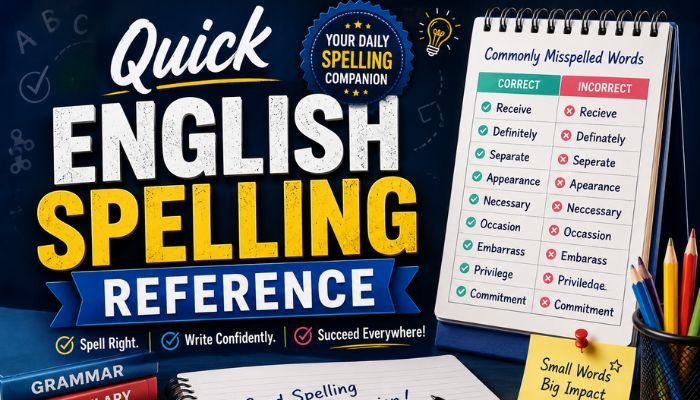
| Common Question | Correct Answer |
|---|---|
| recieve or receive | receive |
| input or imput | input |
| input vs imput | input |
| deselect or unselect | deselect |
| unselect or deselect | deselect |
| signalling or signaling | Both are correct |
| tieing or tying | tying |
| tweek vs tweak | tweak |
| tweek or tweak | tweak |
| acception or exception | exception |
| reinforce vs reenforce | reinforce |
| reenforce vs reinforce | reinforce |
| oversite vs oversight | oversight |
| knowledgeable or knowledgable | knowledgeable |
| laser or lazer | laser |
| lazer or laser | laser |
| unkempt or unkept | unkempt |
| targetted or targeted | targeted |
| pricey or pricy | pricey is generally preferred |
| companywide or company wide | companywide is generally preferred |
| too far or to far | too far |
| Lucas’s or Lucas’ | Lucas’s is widely used |
Common English Meanings at a Glance
| Word or Phrase | Meaning |
|---|---|
| IMK | In my knowledge |
| STG | Swear to God |
| FYP | For You Page |
| El gallo | The rooster |
| Riled up | Angry or agitated |
| Per usual | As usual |
| Neat whiskey | Whiskey served without ice or mixer |
| He is risen | Christian expression referring to Jesus’ resurrection |
| Geez Louise | Mild expression of surprise or frustration |
| Thanks for your patronage | Thanks for your business or support |
| Coming week | Upcoming or next week |
Final Thoughts
English becomes much easier when you understand the small differences between similar words and phrases.
Remember the most important spelling corrections:
receive, input, deselect, tweak, reinforce, oversight, knowledgeable, laser, targeted, unkempt, companywide, too far, exception, and tying.
For texting, abbreviations such as IMK, STG, FYP, and ND can have different meanings depending on context, so always consider the surrounding conversation.
And when two forms are both acceptable, such as signaling/signalling or pricey/pricy, the preferred form may depend on the variety of English or the style guide you are following.
The goal of good English is not simply to memorize rules. It is to communicate clearly, choose the right word for the situation, and make your writing easy for others to understand.
